In the analyzed video, The Hemodynamics Dude uses a First-person POV structure, opens with Question hooks, and builds purchase intent through Trust. This observation is based only on this video's script, storyboard, and public performance data.
In the analyzed video, The Hemodynamics Dude uses a First-person POV structure, opens with Question hooks, and builds purchase intent through Trust. This observation is based only on this video's script, storyboard, and public performance data.
A direct and often slightly provocative question, such as “why is hers so much bigger?!”, can effectively capture attention. By tapping into a shared experience or unresolved curiosity, this opening quickly creates relevance and encourages viewers to stay for the answer or solution.
This perspective makes viewers feel as though they are experiencing it firsthand. Handheld selfie shots show product details and the usage process, creating an immersive sense of authenticity that brings viewers closer and sparks purchase interest.
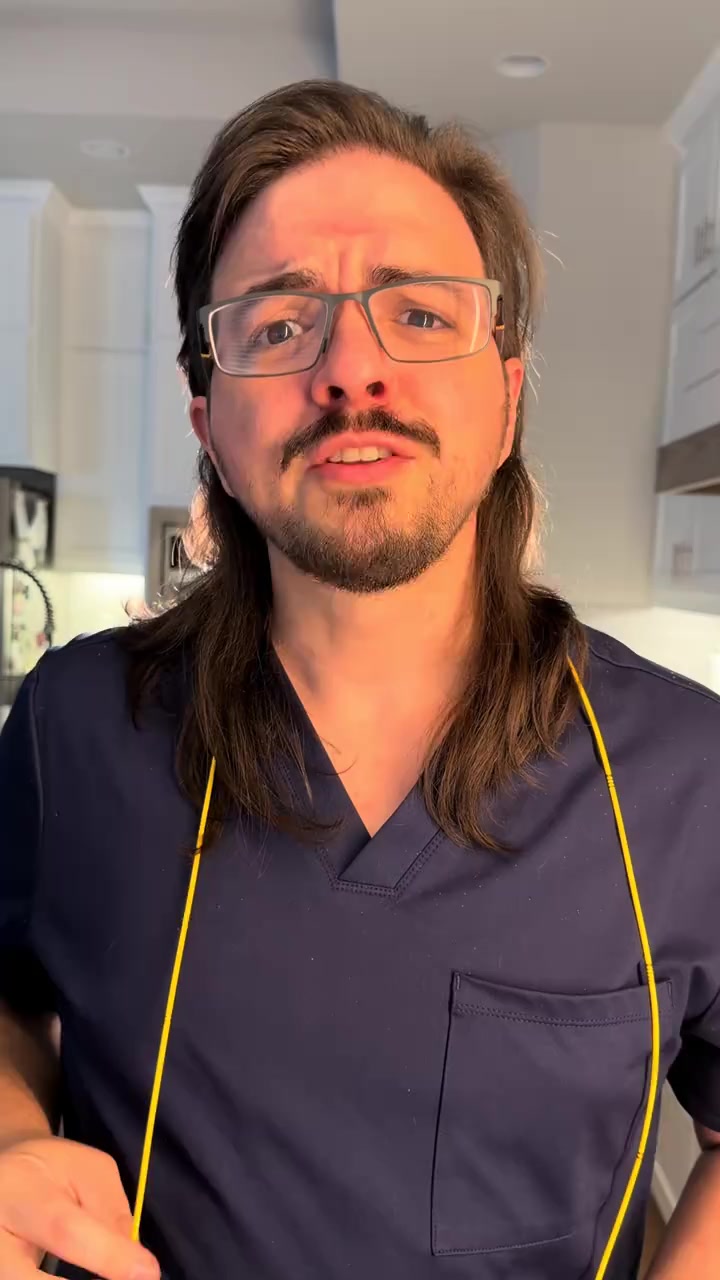
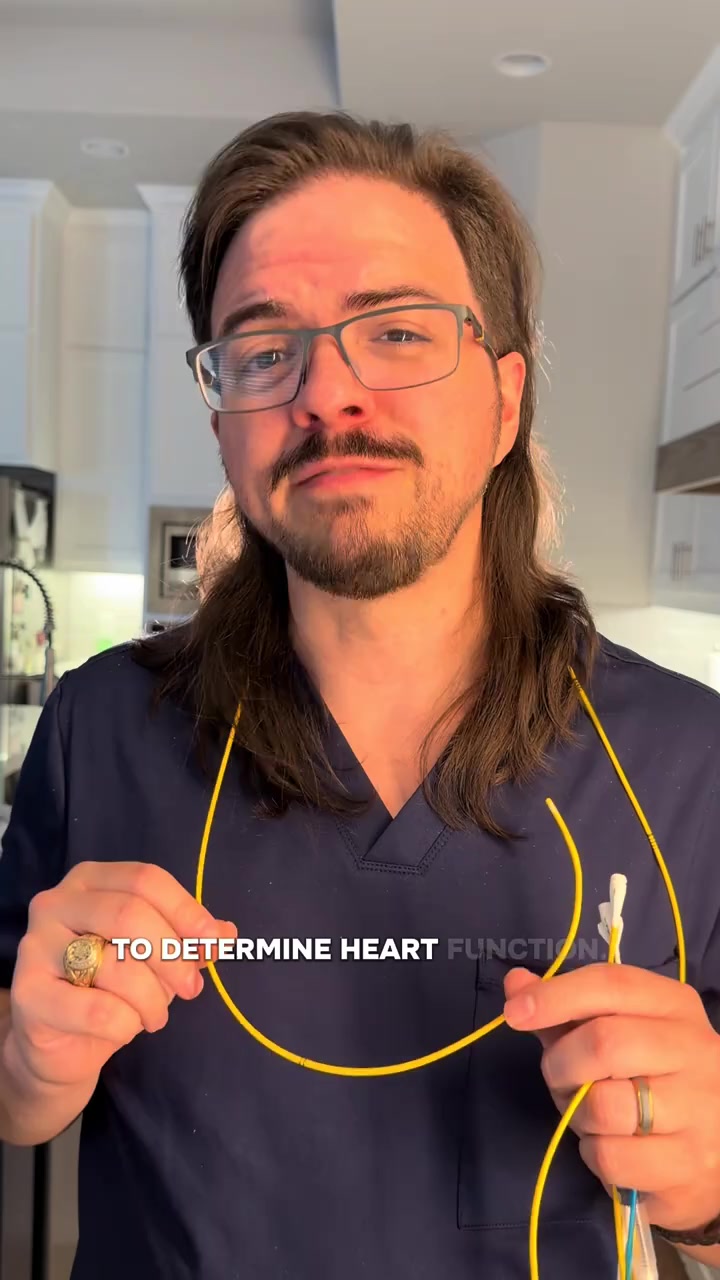
How does a Swan Ganz catheter actually work? The idea of the Swan Ganz catheter is that once it gets past the introducer, when you inflate the balloon, it's supposed to act like a sail and carry the end of the catheter all the way through the right ventricle into the pulmonary artery. This is why you'll hear it called a pulmonary artery catheter. Once it's there, the balloon is usually deflated, and we use various pressures and sensors involved in the pulmonary artery catheter to determine heart function.
Product Benefits
One way is to get a mixed venous sample, which is a venous gas that you can draw from the tip of the pulmonary artery catheter. Another option is to use thermodilution, where injectate is injected into the venous system and as that cold water travels through the right heart, a sensor determines a temperature change, which gives you an idea of how the heart is functioning. You can imagine that if the heart's functioning very well, then all that cold water is gonna be pushed away with warm blood very quickly. And if the heart isn't functioning very well, then that cold water is gonna hang around for a longer period of time. So using complicated mathematics we get an idea of how the heart is functioning.
Instructions for Use
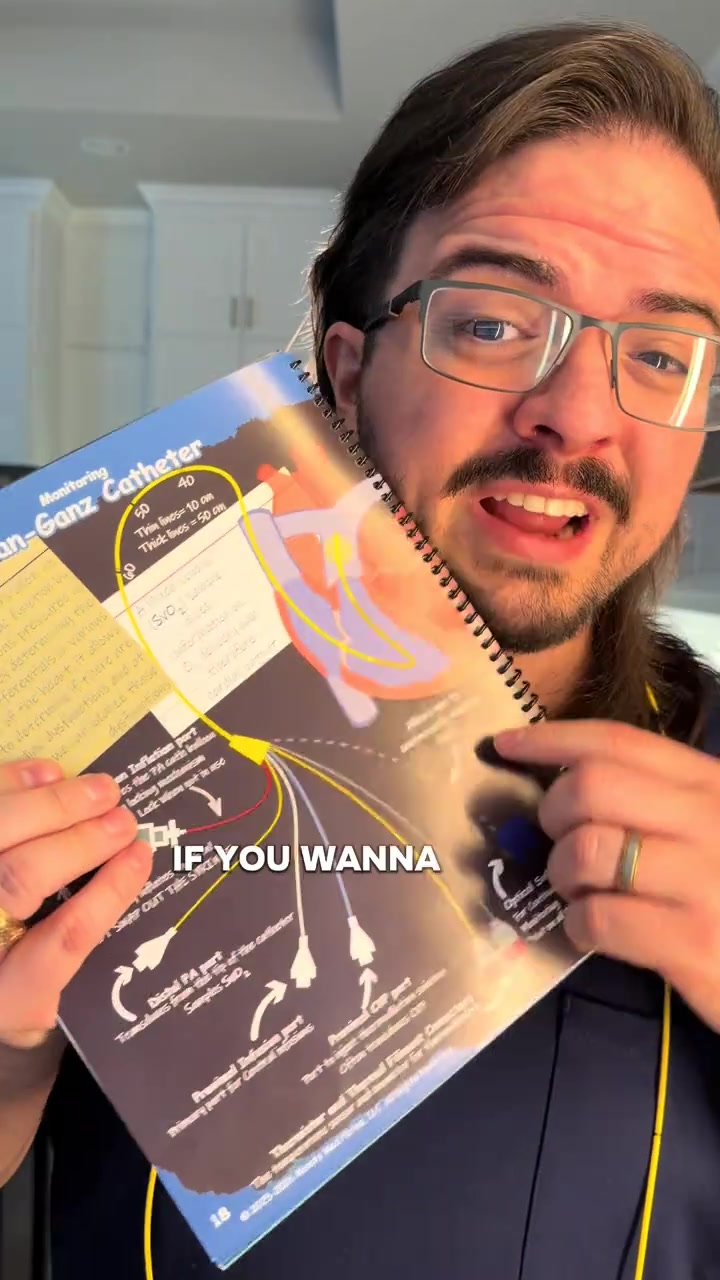
There are also some special ports associated with the Swan Ganz catheter. First, you got your balloon port, which as the name implies allows you to inflate and deflate the balloon. Then you have your distal PA port. This is where you can transduce the very tip of the catheter. And you've got your proximal infusion port, usually used to infuse medications. And your CVP port, where usually you'll put your injectate for thermodilution. You'll also usually have one or more connections like this. This is for the thermistor or the temperature sensing that happens related to thermodilution. Or sometimes you'll have another port that can allow this to be a continuous output Swan, so that it can actually sense the cardiac output and the SVO2 continuously.
Call to Action
If you wanna have an idea of each of these ports' uses or how to check waveforms to make sure that the Swan is appropriately placed, you follow me for more.
Storyboard breakdown
Medium Shot
A man in dark blue medical scrubs stands in the kitchen, holding a yellow Swan Ganz catheter, explaining and showing the main part of the catheter, introducing its basic working principle and other name origin.
Medium Close-up
The man holds the complete catheter to continue the explanation, sequentially introducing the two principles of mixed venous blood sampling and thermodilution for cardiac function detection, using gestures to assist the demonstration.
Close-up
The man shows each special port of the Swan Ganz catheter one by one: balloon port, distal pulmonary artery port, proximal infusion port, etc., explaining the usage details of each port respectively.
Medium Shot
The man takes out a professional reference manual printed with Swan Ganz catheter diagrams, shows the catheter placement waveform chart on the manual to the camera, and finally makes a follow-up appeal to the audience.
Frequently asked questions
How does a Swan Ganz catheter actually work? video FAQ
Questions about this video’s creative strategy, creator, metrics, and creating a similar video.
What hook does this A Visual Guide to Cardiac Critical Care product video use?
This video uses a “Question hooks” opening. The classification is based on the collected video content and available analysis fields, and can help explain how the first few seconds attract attention.
What selling angle and content structure does this video use?
Its primary selling angle is “Trust” and its content structure is “First-person POV.” Use these as strategic references, then adapt the execution to your own product, audience, and brand voice.
Is The Hemodynamics Dude the creator of this video?
The current dataset identifies The Hemodynamics Dude as the video creator. The creator name links to the corresponding public TikTok profile when available; account details may change over time.
Can I use this A Visual Guide to Cardiac Critical Care video to create a similar video?
Yes, you can use it as a creative reference. Octer extracts the hook, pacing, content structure, and presentation pattern, then combines them with your product information instead of directly copying the original footage.
Are the views, engagement, and product metrics shown in real time?
No. The page shows the most recently collected public video and product data. Values may lag because of platform updates, reporting periods, or market changes, so treat them as research signals rather than real-time reporting.
What should I consider when creating content from this reference?
Do not directly reuse the original creator’s footage, music, likeness, or brand assets. Confirm your rights to all product and generated assets, and follow TikTok Shop, advertising-market, and applicable local rules before publishing.