In the analyzed video, The Hemodynamics Dude uses a First-person POV structure, opens with Question hooks, and builds purchase intent through Trust. This observation is based only on this video's script, storyboard, and public performance data.
In the analyzed video, The Hemodynamics Dude uses a First-person POV structure, opens with Question hooks, and builds purchase intent through Trust. This observation is based only on this video's script, storyboard, and public performance data.
Uma pergunta direta e muitas vezes levemente provocativa, como “por que o dela é tão maior?!”, chama a atenção com eficácia. Ao tocar em uma experiência comum ou curiosidade ainda sem resposta, essa abertura cria identificação rapidamente e incentiva o público a continuar para descobrir a resposta ou solução.
Essa perspectiva faz o público sentir que está vivendo a experiência em primeira pessoa. Cenas de selfie gravadas à mão mostram os detalhes e o uso do produto, criam uma sensação autêntica e imersiva, aproximam o espectador e despertam o interesse de compra.
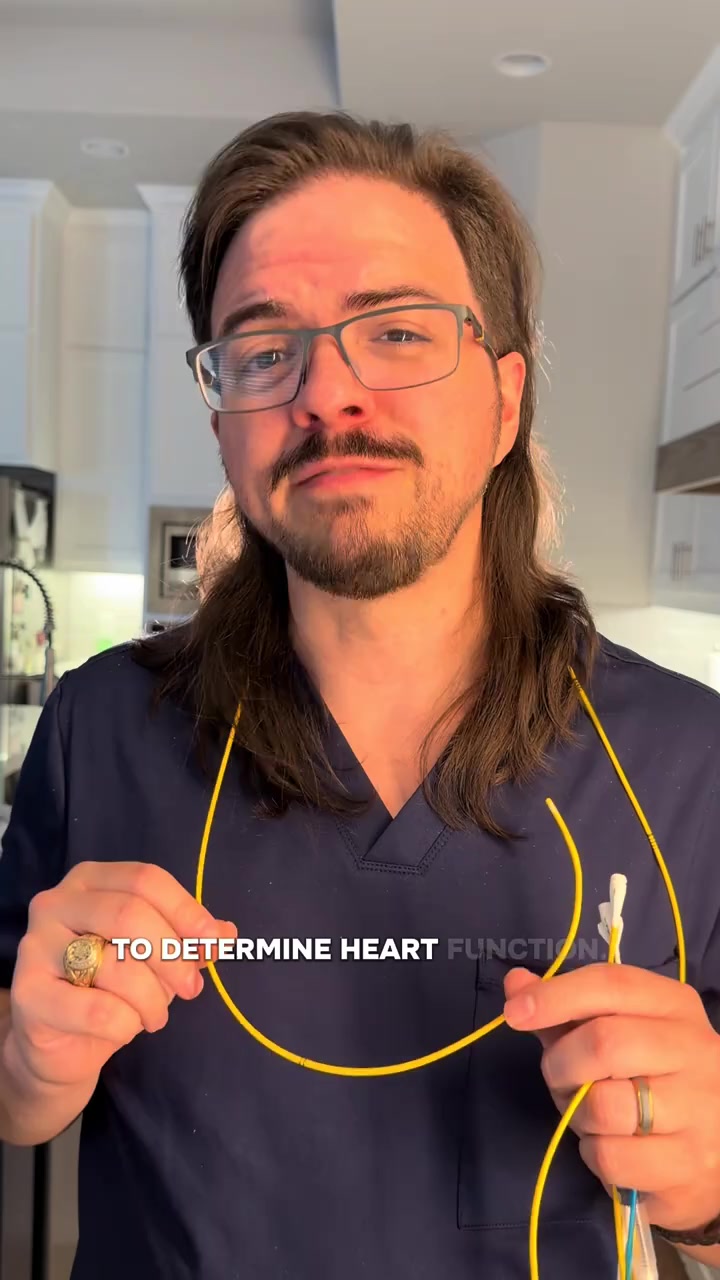
How does a Swan Ganz catheter actually work? The idea of the Swan Ganz catheter is that once it gets past the introducer, when you inflate the balloon, it's supposed to act like a sail and carry the end of the catheter all the way through the right ventricle into the pulmonary artery. This is why you'll hear it called a pulmonary artery catheter. Once it's there, the balloon is usually deflated, and we use various pressures and sensors involved in the pulmonary artery catheter to determine heart function.
Product Benefits
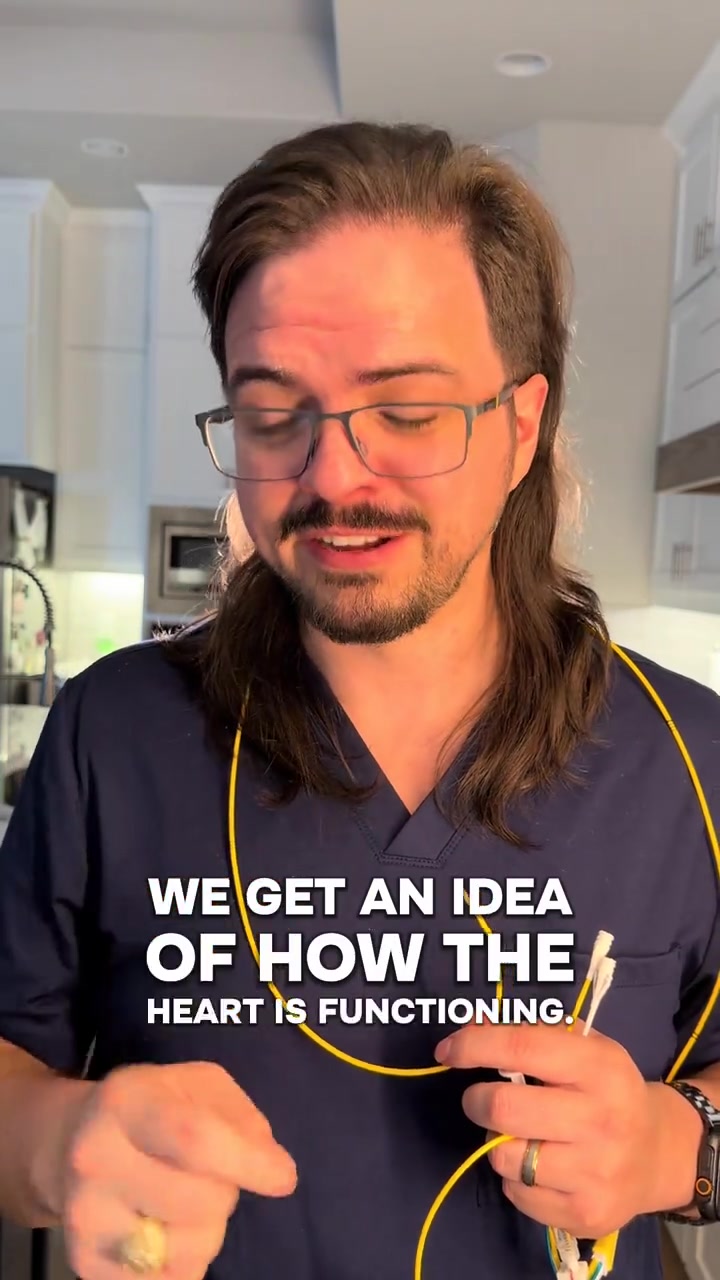
One way is to get a mixed venous sample, which is a venous gas that you can draw from the tip of the pulmonary artery catheter. Another option is to use thermodilution, where injectate is injected into the venous system and as that cold water travels through the right heart, a sensor determines a temperature change, which gives you an idea of how the heart is functioning. You can imagine that if the heart's functioning very well, then all that cold water is gonna be pushed away with warm blood very quickly. And if the heart isn't functioning very well, then that cold water is gonna hang around for a longer period of time. So using complicated mathematics we get an idea of how the heart is functioning.
Instructions for Use
There are also some special ports associated with the Swan Ganz catheter. First, you got your balloon port, which as the name implies allows you to inflate and deflate the balloon. Then you have your distal PA port. This is where you can transduce the very tip of the catheter. And you've got your proximal infusion port, usually used to infuse medications. And your CVP port, where usually you'll put your injectate for thermodilution. You'll also usually have one or more connections like this. This is for the thermistor or the temperature sensing that happens related to thermodilution. Or sometimes you'll have another port that can allow this to be a continuous output Swan, so that it can actually sense the cardiac output and the SVO2 continuously.
Call to Action
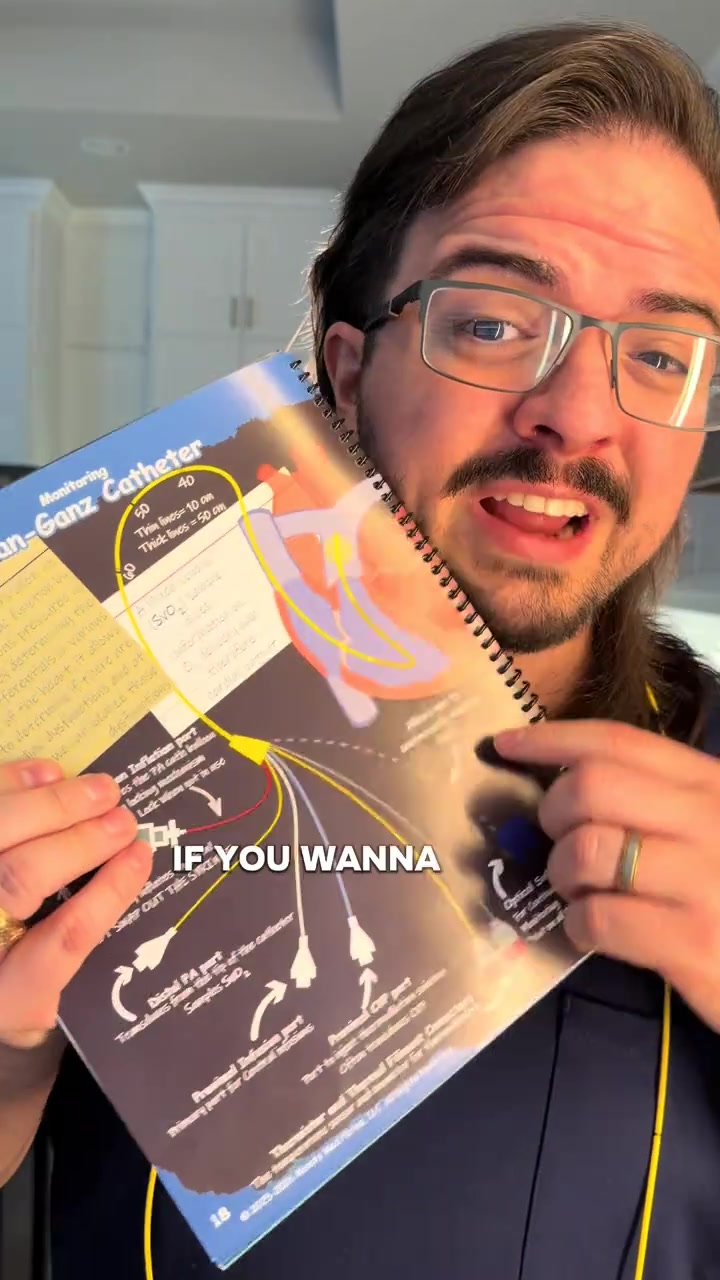
If you wanna have an idea of each of these ports' uses or how to check waveforms to make sure that the Swan is appropriately placed, you follow me for more.
Análise do storyboard
Medium Shot
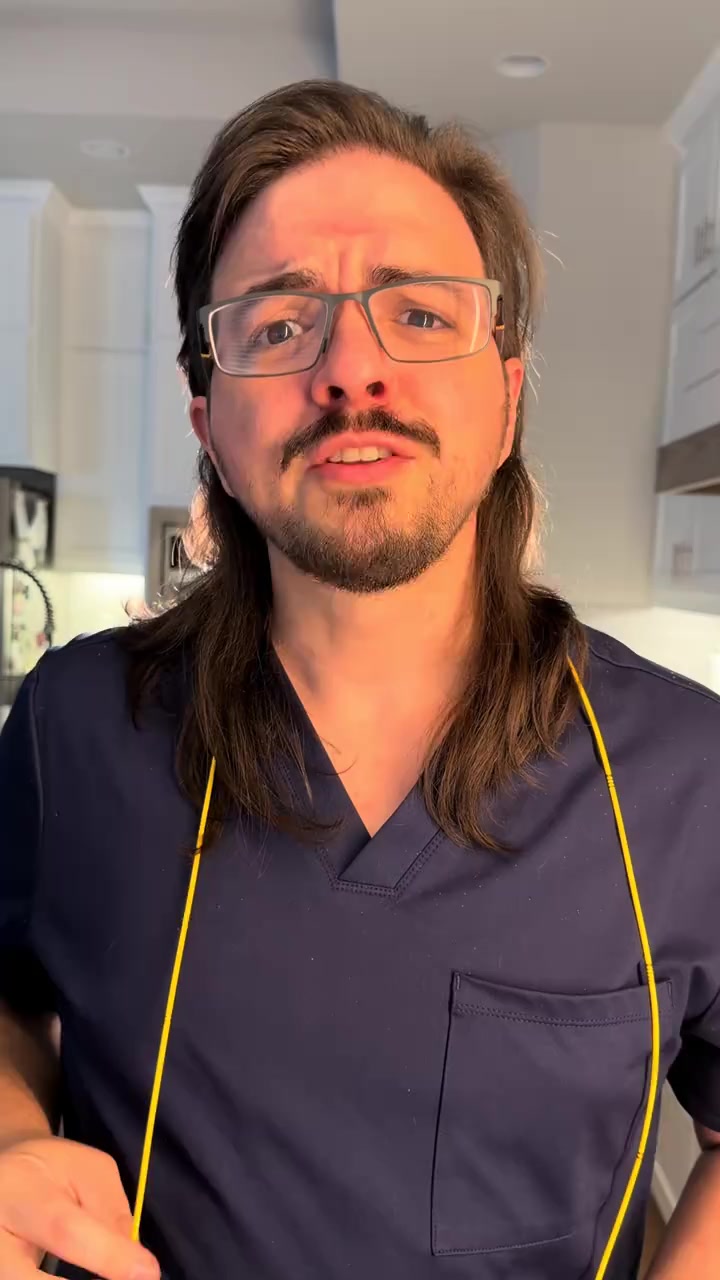
A man in dark blue medical scrubs stands in the kitchen, holding a yellow Swan Ganz catheter, explaining and showing the main part of the catheter, introducing its basic working principle and other name origin.
Medium Close-up
The man holds the complete catheter to continue the explanation, sequentially introducing the two principles of mixed venous blood sampling and thermodilution for cardiac function detection, using gestures to assist the demonstration.
Close-up
The man shows each special port of the Swan Ganz catheter one by one: balloon port, distal pulmonary artery port, proximal infusion port, etc., explaining the usage details of each port respectively.
Medium Shot
The man takes out a professional reference manual printed with Swan Ganz catheter diagrams, shows the catheter placement waveform chart on the manual to the camera, and finally makes a follow-up appeal to the audience.
Perguntas frequentes
Perguntas sobre o vídeo How does a Swan Ganz catheter actually work?
Perguntas sobre a estratégia criativa, o criador, as métricas e a criação de um vídeo semelhante.
Qual gancho inicial o vídeo de A Visual Guide to Cardiac Critical Care utiliza?
O vídeo começa com “Gancho com pergunta”. A classificação usa o conteúdo coletado e os dados de análise para explicar como os primeiros segundos atraem atenção.
Qual ângulo de venda e estrutura este vídeo utiliza?
O principal ângulo é “Trust” e a estrutura é “POV em primeira pessoa”. Adapte essas ideias ao seu produto, público e voz de marca.
The Hemodynamics Dude é o criador deste vídeo?
Os dados atuais identificam The Hemodynamics Dude como criador. Quando disponível, o nome leva ao perfil público no TikTok.
Posso usar o vídeo de A Visual Guide to Cardiac Critical Care para criar um semelhante?
Sim. A Octer usa gancho, ritmo, estrutura e apresentação como referência e combina esses elementos com as informações do seu produto sem copiar o material original.
Visualizações, engajamento e dados do produto são em tempo real?
Não. A página mostra os dados públicos coletados mais recentemente, que podem sofrer atrasos por atualizações da plataforma e períodos de relatório.
O que devo considerar ao criar conteúdo com esta referência?
Não reutilize diretamente vídeo, música, imagem ou ativos de marca do criador. Confirme os direitos e as regras aplicáveis antes de publicar.