The Complete Guide to Product Seeding: How Brands Can Earn Organic Content Through Creator Gifting

What Is Product Seeding?
Product Seeding, also called creator gifting, is a form of Creator Marketing in which a brand provides products to creators for free so they can genuinely experience them and potentially create organic content.
Unlike traditional paid influencer partnerships, Product Seeding usually does not require a fixed deliverable or obligate a creator to post. The goal is not to buy a single ad. It is to build creator relationships through real product experiences and identify long-term partners who genuinely believe in the product.
For brands building a Creator Marketing program, Product Seeding is often an important first step. Before sending products, brands need to find creators who match their target audience and establish an effective vetting process. See our guide, “How to Find Micro-Influencers for Product Seeding,” for more on discovering and evaluating high-value creators.
Traackr’s Influencer Product Seeding Report found that 92% of surveyed marketers believe Product Seeding can effectively improve brand awareness—evidence that gifting has become an important part of many brands’ Creator Marketing mix.
A truly effective Product Seeding strategy is more like a creator-collaboration process that improves over time. Creator selection, first outreach, fulfillment, content feedback, and future partnerships all give a brand new evidence on which to make better decisions.
As Influencer Marketing shifts from one-off promotions toward long-term creator relationships, more brands are looking for low-cost ways to identify the right partners. Product Seeding is a widely used strategy in that process.
How to Run a Product Seeding Campaign: From Creator Selection to Performance Review
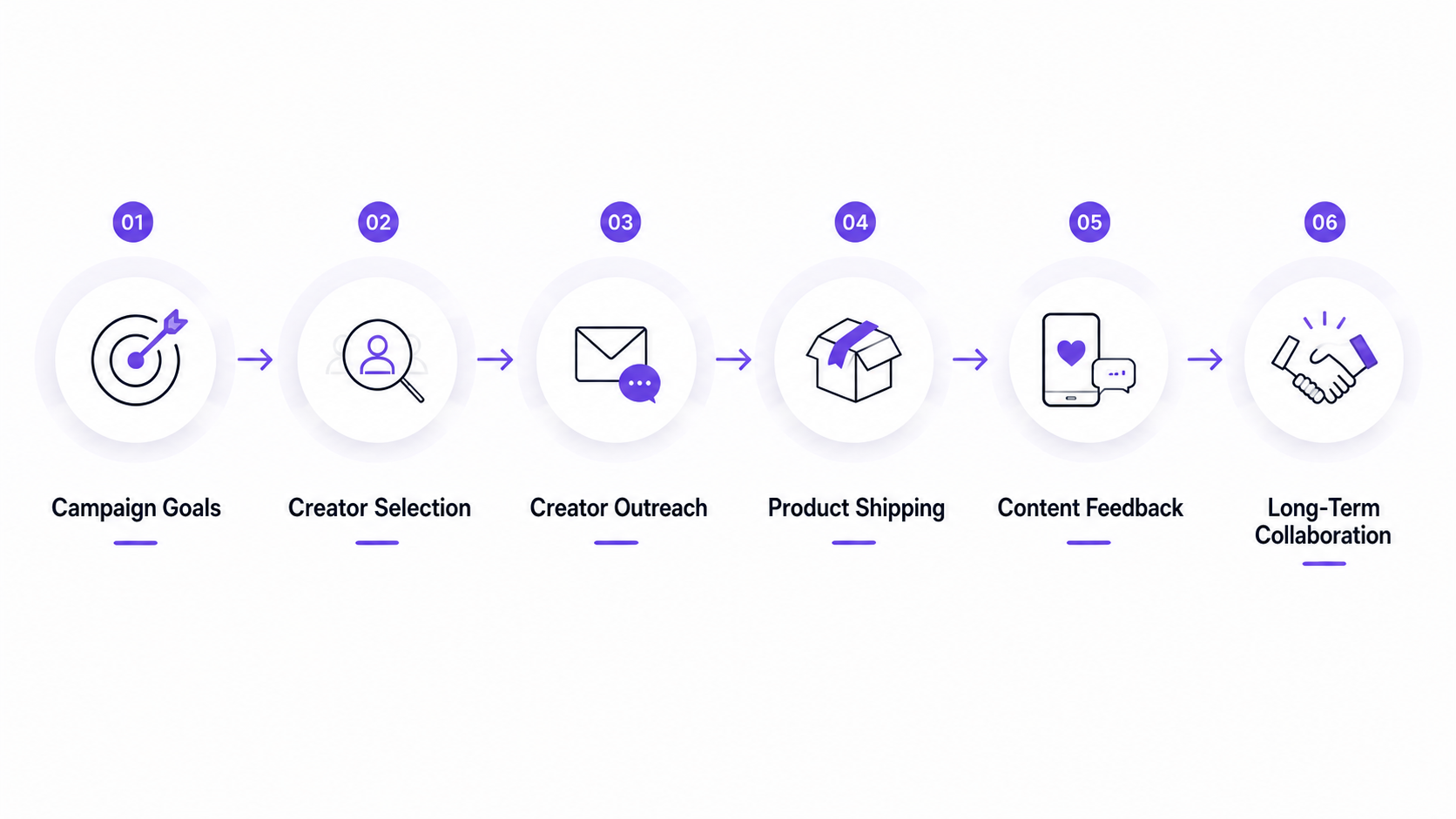
Creator seeding is not simply about shipping a product. An effective campaign needs an end-to-end process: goal setting, creator selection, product fulfillment, content collection, and a final review. Every step affects the outcome.
For brands, the real value of Product Seeding is not only a handful of organic posts. It is the data accumulated about creators, content, and audience response—data that can inform the next round of Creator Marketing.
Step 1: Define the Product, Campaign Purpose, and Seeding Goals
Before looking for creators, define the goal of the Product Seeding campaign and what you want to validate.
Different products call for very different seeding strategies. A product that requires installation or has a steep learning curve needs a different creator profile and content format than a consumer product that can be tried immediately.
A clear objective helps a brand define in advance the product’s key value proposition, target customer profile, suitable platforms and content formats, and the standards by which campaign success will be measured.
Step 2: Discover and Vet Creators Who Fit the Brand
Once the plan is in place, the next step is to find creators whose profiles match the brand’s goals.
The core of Product Seeding is not finding the creator with the largest follower count. It is finding creators who can show the product naturally and who have a genuine target audience.
Brands can use platform search, creator databases, and content-analysis tools to find potential partners, then vet them across the following dimensions.
Audience fit
First, assess whether a creator’s audience matches the brand’s target customer. Followers’ locations, ages, interest tags, and the conversations in the comments are often more important than follower count alone. A large audience that does not match may not drive meaningful conversion.
Content fit
Product Seeding depends on authentic experience, so the creator’s content style must suit the product. A creator who has long shared skincare content and suddenly recommends tech hardware may reduce credibility, even with a large following. Prioritize creators who can integrate the product naturally into their existing content context.
Partnership history
Review prior brand work: whether the creator has promoted competitors, whether sponsored content makes up too much of their output, and whether past partnerships still feel authentic. Creators who frequently accept every brand promotion are not necessarily the best candidates for a long-term relationship.
Reachability
Even a highly aligned creator is difficult to bring into a campaign without a public contact method or partnership channel. Confirm that a workable point of contact exists in advance.
Brand safety
Finally, carry out a basic brand-safety check. The standard is not to find a “perfect” creator, but to confirm that their public content does not clearly conflict with the brand’s values.
Step 3: Creator Outreach That Starts a Useful Conversation
Once you have found the right creators, the next step is outreach.
When creator invitations underperform, it is often not because the product lacks appeal but because the message is too templated. Creators receive many collaboration requests every day. If they cannot quickly understand why they were chosen and what the collaboration involves, a reply is unlikely.
Effective outreach should include three core messages:
· Why you chose this creator: show that you have paid attention to their work rather than sending a mass message.
· Why the product fits their audience: help the creator understand the value of the collaboration.
· A clear collaboration model: state that this is Product Seeding with no required post, reducing the pressure of the conversation.
Personalization does not mean writing every email from scratch. It means adding genuine observations about each creator to a standardized process.
Brands should also record replies, shipment status, and the timing of follow-ups so the relationship does not end when the email thread does.
Step 4: Product Fulfillment and Logistics for a Smooth Process
After a creator agrees to receive the product, the brand needs to confirm shipping details, send the product, and track delivery.
Fulfillment management is easy to overlook in small collaborations. But as the number of shipments grows, a lack of clear records creates obvious problems: you do not know who received a product, when it arrived, whether a follow-up is needed, or what the next partnership opportunity might be.
A complete seeding record should include creator details, product ship date, shipping status, delivery confirmation, and the next follow-up date.
For scaled Product Seeding programs, brands also need a unified workflow that records creator communication, logistics status, and content feedback in one place. This prevents information from being scattered across inboxes, spreadsheets, and chat tools.
Shipping the product is not the end of Product Seeding. It is the beginning of content feedback and a potential long-term relationship.
Step 5: Collect Content and Review Performance to Build Institutional Learning
The value of Product Seeding is not limited to earning a few pieces of content. It helps brands learn which creators, formats, and product angles actually work.
When a creator posts or shares experience feedback, record the content link and core performance, audience response in the comments, content format and messaging, and the fit between the creator and the product.
At the end of the campaign, move creators with high-quality content, strong engagement, and a good fit onto a long-term partnership list, potentially for paid work. Keep relationships with creators who responded positively but did not post, and wait for future opportunities. Archive creators who did not respond or are a weak fit to avoid repeat investment.
A successful Product Seeding campaign should not merely leave behind a few tagged posts. It should build a lasting understanding of creators, content, and audience needs that guides the next collaboration.
Gifting vs. Paid Partnerships: How Should Brands Choose?
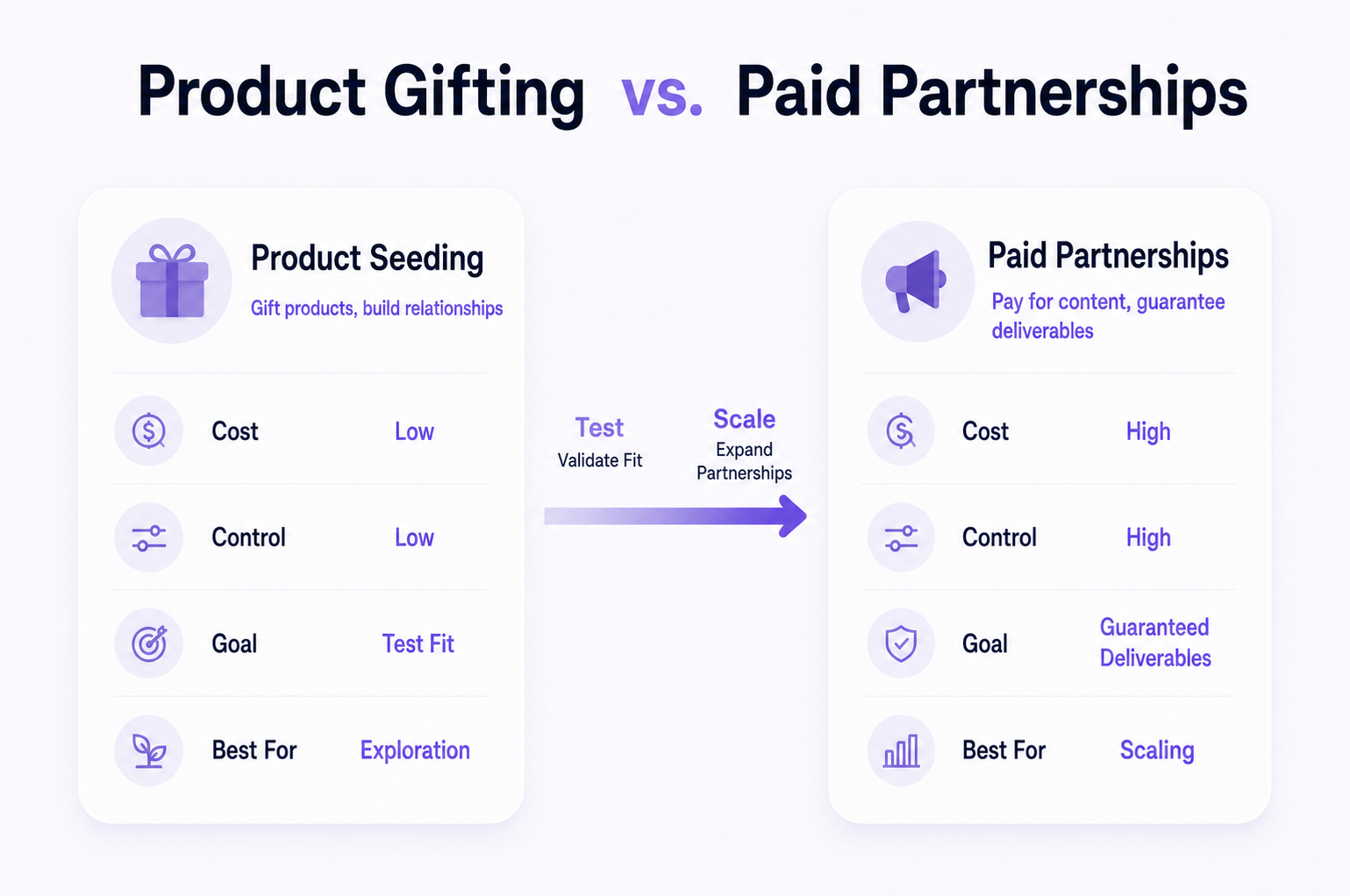
Product Seeding (gifting) and paid creator partnerships are not interchangeable approaches. They are strategies for different stages of a partnership.
Put simply, Product Seeding is best for testing creator fit and building long-term relationships; paid partnerships are best for marketing goals that require defined deliverables and reach.
When to Choose Product Seeding
Product Seeding is well suited to the following situations:
· Testing product–creator fit: use real product experience to see which creators can show the product naturally.
· Reducing the cost of experimentation: validate content direction and audience response before committing paid budget.
· Finding long-term partners: identify creators worth continued investment through organic collaboration.
Note, however, that Product Seeding usually cannot guarantee that a creator will publish content, nor can it control the timing or wording of a post in advance.
When to Choose Paid Partnerships
Paid partnerships are a better fit when a brand needs clear outcomes, for example:
· Ensuring that content goes live as planned.
· Specifying the content format and publication date.
· Securing usage rights for advertising or other marketing channels.
Paid partnerships offer greater certainty, but they also carry higher upfront costs.
The Best Path: Seed First, Then Pay
For most brands, the best approach is not an either/or choice. First use Product Seeding to find creators who are genuinely well matched, then convert the strongest performers into long-term paid partners.
Product Seeding discovers opportunity; paid partnerships amplify the result.
How to Scale Product Seeding Campaigns
As Product Seeding grows from a few partnerships to multiple creators moving in parallel, the brand’s challenge is no longer simply finding creators. It is managing the entire collaboration process.
Scaled Product Seeding requires ongoing records of creator fit, shipping status, content feedback, and future partnership opportunities. Otherwise, information quickly spreads across spreadsheets, inboxes, and chat histories, making it hard to see which creators are truly worth a long-term investment.
Octer was built for this loop. Instead of searching across spreadsheets, inboxes, and memory for the state of each relationship, you can see every creator in one view: matched, contacted, replied, posted, or ready for paid collaboration. It turns the learning loop from manual administrative work into a background system, so your team can focus on the decisions that matter: who is right, what to say next, and when to scale.
Find your creators with Octer.
Frequently Asked Questions
Will Product Seeding always generate creator content?
No.
Product Seeding is not the same as buying content. After receiving a product, a creator can decide whether to share it based on their own experience and content plan.
That is why a successful program should not focus only on publication volume. It should also consider creator feedback, content quality, and whether it has identified creators worth working with over the long term.
Do brands need to pay creators for Product Seeding?
Usually, no.
Product Seeding primarily uses the product itself as the basis for collaboration. It is suitable for testing creator fit and building an initial relationship.
If a brand needs a guaranteed publishing date, prescribed content format, or content usage rights, a paid creator partnership is more appropriate.
How can brands find creators who are right for Product Seeding?
Do not evaluate creators by follower count alone. Pay closer attention to audience fit, content style, partnership history, and brand safety.
With a systematic creator-vetting process, brands can find creators who better fit their products and target customers, improving the results of Product Seeding.
Start Building Your AI-Powered Marketing Content Growth Workflow
Contact us to learn how Octer can help your team build an AI-powered marketing workflow.
Contact the Octer team: https://octer.ai