MiniMax H3: Next-Generation AI Video Generator Ranks Near the Top of Arena AI's Image-to-Video Leaderboard

MiniMax H3 is MiniMax's latest AI video generator, built to improve video realism, creative control, and multimodal video generation.
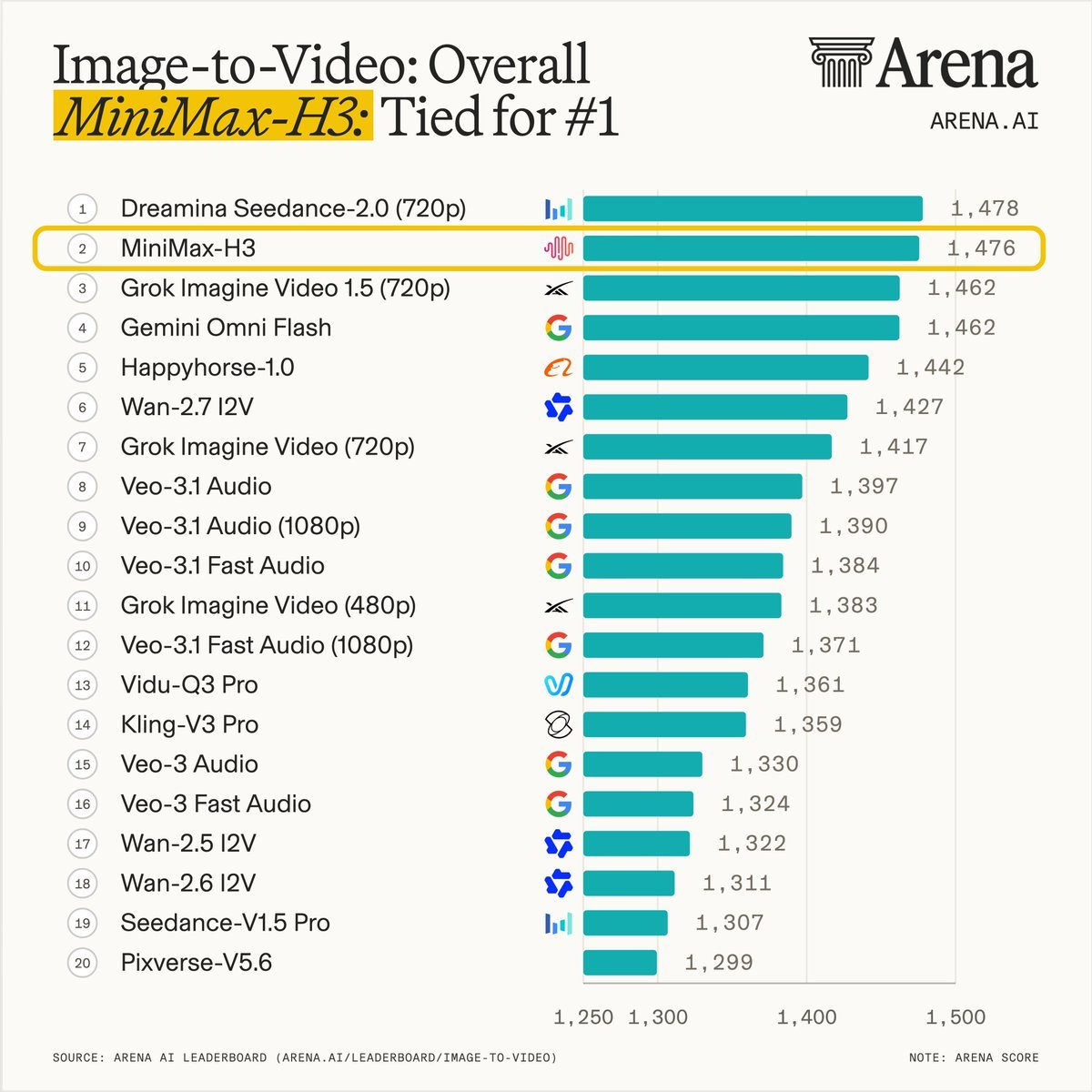
On Arena AI's latest Image-to-Video leaderboard, MiniMax H3 scored 1476 points and ranked second—just behind Dreamina Seedance-2.0 at 1478. That result places it among the current leading image-to-video AI models.
By combining inputs such as text and images, MiniMax H3 aims to help users create more coherent, expressive videos for advertising, ecommerce, social media, and creative production.
As an AI video generation model for next-generation video creation, MiniMax H3 focuses on stronger visual understanding and more controllable video generation.
Earlier AI video workflows often relied primarily on a text prompt. MiniMax H3 puts greater emphasis on multimodal input and creative control: users can combine different types of source material to give the model richer references and generate video closer to their intended outcome.
Its core capabilities include:
- Image-to-video generation: Interprets the subject, scene, and visual style of an input image, then produces video with motion.
- Text-guided video generation (text-to-video): Uses natural-language prompts to control video content, camera changes, and overall style.
- Video understanding and editing: Supports modifications and creative extensions based on existing video assets, making AI video creation more flexible.
By improving its understanding of relationships among images, text, and video, MiniMax H3 lowers the barrier to AI video generation and gives users more precise control over output.
Multimodal Input: Moving Beyond a Single Prompt for Greater Creative Control
Traditional AI video generation models typically depend on text prompts to describe what should appear on screen. In real production, however, words alone are often not enough to communicate complex visual requirements accurately.
MiniMax H3 strengthens multimodal understanding and supports video generation from a combination of source materials. This gives users a more direct way to guide the creative direction.
Users can work with:
- Text descriptions: Define the video's theme, scene, and action.
- Image references: Specify people, products, environments, and visual style.
- Video footage: Extend existing material or explore creative variations.
By understanding how information across these modalities relates, MiniMax H3 can better preserve subject characteristics, scene logic, and overall visual consistency. The result is AI-generated video that is better aligned with the creator's brief.
For advertising, ecommerce, and social media creators, multimodal capability means AI video production can become more than entering one description and waiting for an output. Existing creative assets can serve as a starting point for more detailed production and iteration.
More Stable AI Video Generation and More Natural Motion
One of the central challenges in AI video generation is maintaining consistency across consecutive frames.
For short-form video, advertising, and commercial content, it is not enough for an individual frame to look compelling. People, objects, and scenes also need to remain stable throughout the video.
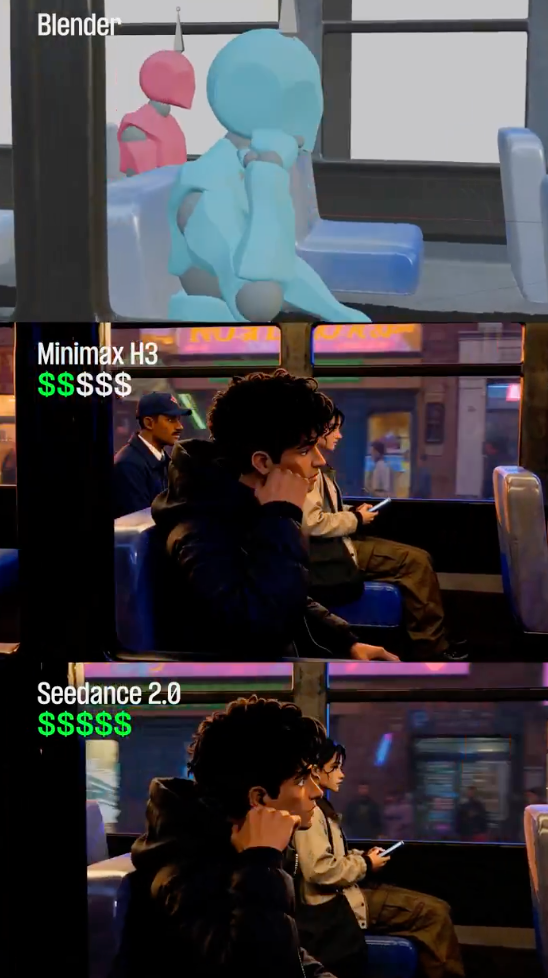
MiniMax H3 is optimized for consistency and dynamic expression in video generation, with improved understanding of motion changes and complex scenes.
Key improvements include:
- More natural motion: Improves continuity in character actions, camera movement, and object motion.
- Stronger visual consistency: Reduces changes in a subject's appearance and abrupt scene shifts during generation.
- Richer visual detail: Enhances lighting, textures, and overall realism in generated video.
These capabilities bring AI video generation closer to practical production needs, helping creators make video assets that are better suited to marketing, brand showcases, and social media distribution.
AI Video Generation for Advertising, Ecommerce, and Social Media
As AI video models improve, their role is expanding from experimental creation into real production workflows.
MiniMax H3's multimodal understanding and AI video generation capabilities can support a wider range of commercial content-production scenarios.
Ecommerce Product Videos
Brands can use product images and text descriptions to rapidly create product showcase videos in different styles.
Compared with traditional video production, an AI video generator can reduce the effort involved in shooting and post-production while helping brands test more creative directions.
Advertising Creative Production
During ad delivery, brands typically need to test different video assets continuously.
MiniMax H3 can help creators quickly generate:
- Ad variations in different visual styles
- Product showcases in different settings
- Video content with different narrative approaches
By increasing asset-production efficiency, AI video models are becoming an important tool in brand content marketing workflows.
Social Media Video Creation
For short-form video creators, consistently producing high-quality content often requires significant time.
AI video models can speed up the path from initial concept to generated video, enabling more people to take part in video creation.
AI Video Model Competition Enters a New Phase
The launch of MiniMax H3 also reflects intensifying competition in AI video generation.
Leading AI video models continue to improve generation quality and creative control, including:
- Dreamina Seedance-2.0: Performs strongly in image-to-video evaluations and emphasizes commercial video creation.
- Google Veo series: Focuses on high-quality video generation and real-world understanding.
- OpenAI Sora: Explores complex-scene generation and video-understanding capabilities.
- Kling AI: Continues to improve motion quality and generation stability.
In Arena AI's latest Image-to-Video leaderboard, MiniMax H3 ranked second with 1476 points, only two points behind Seedance-2.0. This result indicates that MiniMax H3 is highly competitive in image-to-video generation.
As model capability advances, the competitive question for AI video is shifting from whether a model can generate video to whether it can create video that meets a creator's production requirements.
The strongest future AI video generators will need more than high image quality and natural motion. They will also need to understand user intent and help creators move more efficiently from an idea to a finished video.