No Hook
Videos that begin without a distinct attention-grabbing hook.
View breakdownCreative breakdown
A brief 'July? / May, 2025' date comparison supplies the opening for a get-ready-with-me video associated with a HODEKT automatic curler.
Try creating a similar video for freeView source on TikTokCreative breakdown
A brief 'July? / May, 2025' date comparison supplies the opening for a get-ready-with-me video associated with a HODEKT automatic curler.
Videos that begin without a distinct attention-grabbing hook.
View breakdownThe product is woven into an everyday getting-ready routine to show its immediate results. Clear before-and-after comparisons highlight its effectiveness, while detailed usage steps and core ingredients build authenticity and trust.
View breakdownThis approach helps viewers connect the product with an aspirational lifestyle or personal style. By placing it in carefully curated scenes, such as a complete outfit of the day (OOTD) or themed home decor, creators show how it can elevate the user’s taste and presence, inspiring purchase intent.
View breakdownLet me share the story of how I got famous. I'm not truly famous, I just went viral. I started being a content creator in July—July, August, September—wait, actually I started in May. I hit 1 million followers in September, so it only took around 5 months to reach that milestone. I'm not bragging, but I really can't help showing off a little. One of my videos blew up, and anyone who knows me definitely knows it—it was my fake Chinese accent skit.
One random night, someone commented on one of my videos asking if I was Korean. I decided to mess around with those comments, opened Google Translate, pretended to be Korean at first, then joked that I was actually an Ilonggo Filipino. It blew up to 1 million views in one day. Later someone asked if I was Chinese, so I made another skit along that line, which hit 2 million views in a day. After that I tried impersonating Russians, Indians, and Italians, even though I only know Filipino and English natively. But I can pick up accents really easily; for example, when I pretend to be Indian I’ll say things like “what are you doing brother”, and I always match my English accent to the language I’m pretending to speak before revealing who I really am.
I don’t even know what I was saying just now, but I realized I’m really good at mimicking accents, though I’m not sure if my pronunciations are accurate. I just knew this accent bit grabbed people’s attention, so I kept making the videos for fun, and they really blew up. A little tip for fellow creators: if one of your videos goes viral, try making new content that’s related to that viral topic.
That was the peak of my career, my follower count grew, brands started reaching out to me for deals, all kinds of opportunities came my way. I don’t know if I got here by luck or hard work, I think it’s because I’m creative. The funniest part is when fans meet me in person, they’ll ask me to do the Chinese or Korean accents, and I just tell them straight up I can’t actually speak those languages, I only used Google Translate for the content.
When kids ask me to do the Chinese accent, I just say random Chinese phrases I don’t understand, just to impress them. That’s how I get along with kids. But I’ve always worried—what if a native Chinese speaker watched those videos I made? Oh my god, if my pronunciation was wrong, or that phrase meant something totally different, that’s my biggest fear.
People ask why I stopped making the Chinese and Korean accent videos, because people grow. If I kept making the same type of video over and over, audiences would get bored, so I had to think of new content ideas. That chapter is over, but it was really fun making those videos, I’m happy I made them and have no regrets, because that’s how I went viral. Alright guys, let me know what other story times you want to hear from me—drop a comment if you want to hear the story of how I survived cancer, let me know if you’re curious.
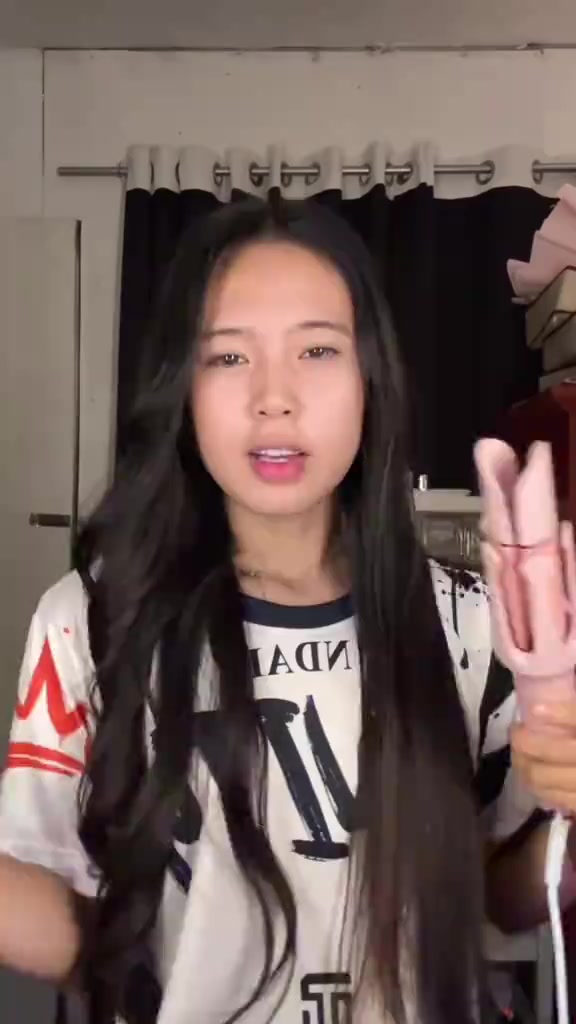
The girl starts by greeting the viewer while holding a pink automatic curling iron; two thumbnails of her viral high-view videos pop up on screen. She sections and curls her hair while recounting how she started as a content creator and hit one million followers in just five months, with on-screen text showing relevant date markers.
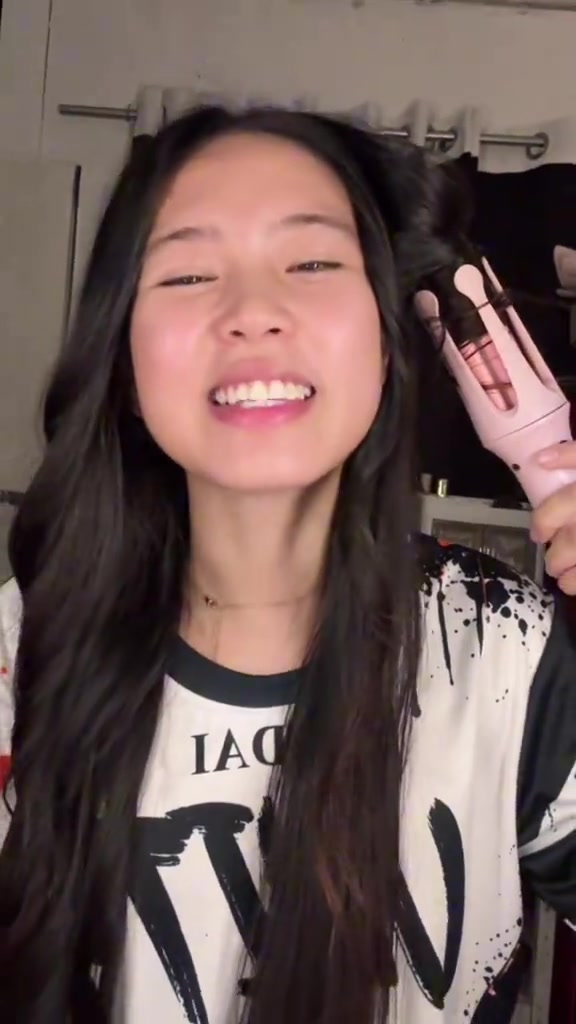
She releases the newly curled section, picks up another section to curl, and explains how a viewer once asked if she was Korean. She played along by using Google Translate to film skits mimicking Korean and Chinese accents, which went viral; she later imitated accents from multiple other countries, noting she adapts to different regional accents easily.
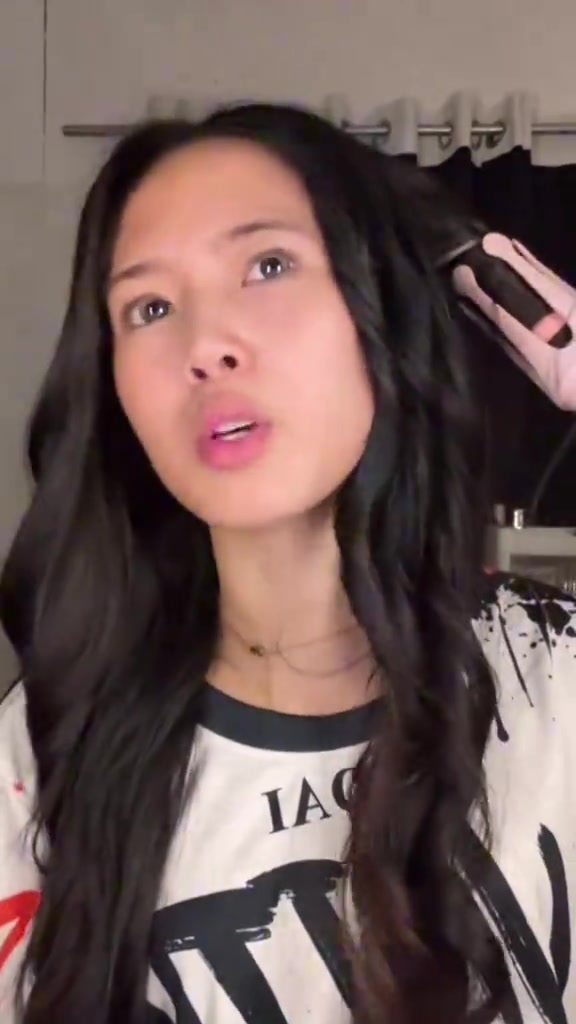
She holds the curling iron in place on a section of hair, gesturing as she talks. She admits she is unsure if her imitated pronunciations are accurate, but this trait grabbed audience attention. She gives advice to fellow creators: after a video goes viral, keep making content in the same related niche.
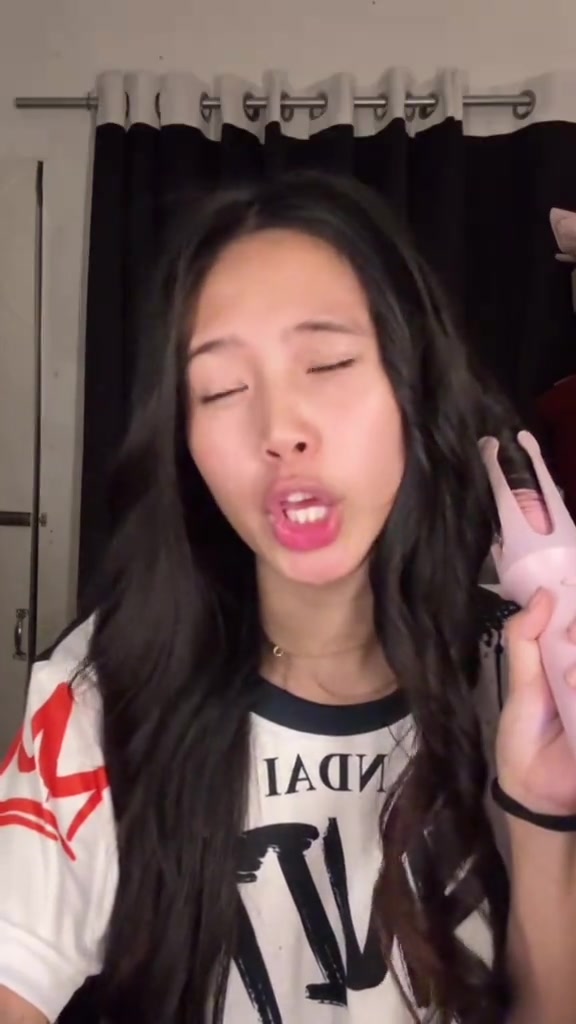
She continues curling her hair while talking about growing her follower count and landing brand deals, unsure if her success came from luck or her own creativity. She sets the curling iron down, runs her fingers through her finished bouncy curls, and shares funny stories about meeting viewers offline who ask her to do the accent impressions.
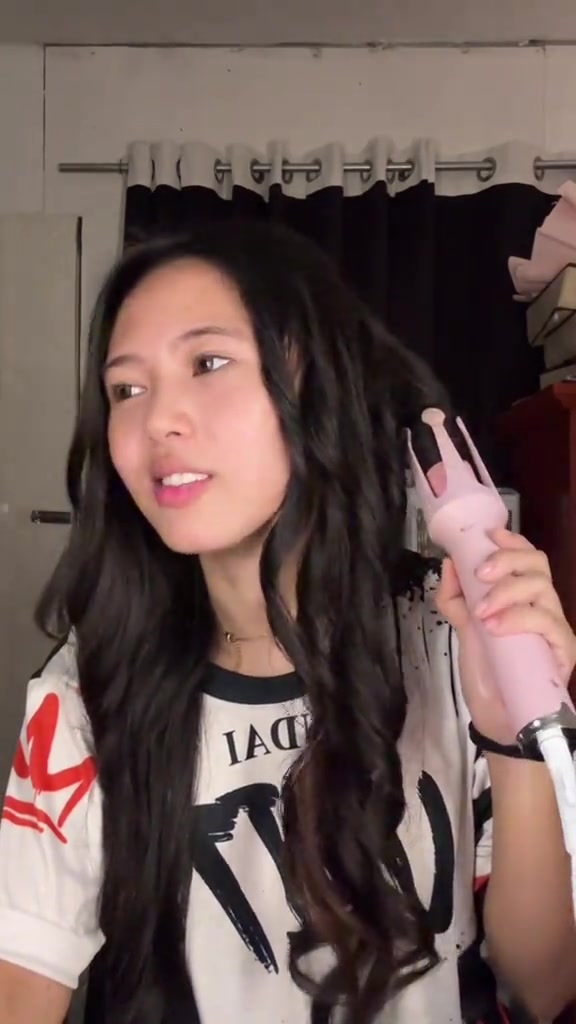
She picks up a green comb to smooth her curls, dispenses foam hair product into her palm to rub between her hands, then picks the curling iron back up to finish curling the remaining sections. She explains why she stopped making the accent-impression content, and shares her worry that native speakers of the languages she imitated might notice her incorrect pronunciation.
She sets the curling iron down, adjusts her finished curls facing the camera, waves to interact with viewers, invites them to comment on what kind of story time they want to hear next, and ends the video with a playful tongue-out face.
Frequently asked questions
Questions about this video’s creative strategy, creator, metrics, and creating a similar video.
This video uses a “No Hook” opening. The classification is based on the collected video content and available analysis fields, and can help explain how the first few seconds attract attention.
Its primary selling angle is “Identity angle” and its content structure is “GRWM product videos.” Use these as strategic references, then adapt the execution to your own product, audience, and brand voice.
The current dataset identifies Preah Padilla as the video creator. The creator name links to the corresponding public TikTok profile when available; account details may change over time.
Yes, you can use it as a creative reference. Octer extracts the hook, pacing, content structure, and presentation pattern, then combines them with your product information instead of directly copying the original footage.
No. The page shows the most recently collected public video and product data. Values may lag because of platform updates, reporting periods, or market changes, so treat them as research signals rather than real-time reporting.
Do not directly reuse the original creator’s footage, music, likeness, or brand assets. Confirm your rights to all product and generated assets, and follow TikTok Shop, advertising-market, and applicable local rules before publishing.