Get Marketing Insights First
Subscribe to receive actionable strategies, growth tips, and industry insights delivered straight to your inbox.
Should you use Claude Managed Agents or build your own agent loop? Here's the real trade-off breakdown for small teams and independent developers.
You’ve got an agent to ship. Now you’re staring at two tabs — the Claude Managed Agents docs and a half-finished LangGraph repo someone on your team started three weeks ago.
Both will technically work. That’s not the question. The question is which one you can actually run in production without it becoming your second job.
This is a breakdown of that decision — including the cases where DIY is genuinely the better call.
Before the comparison gets useful, let’s be precise about scope.
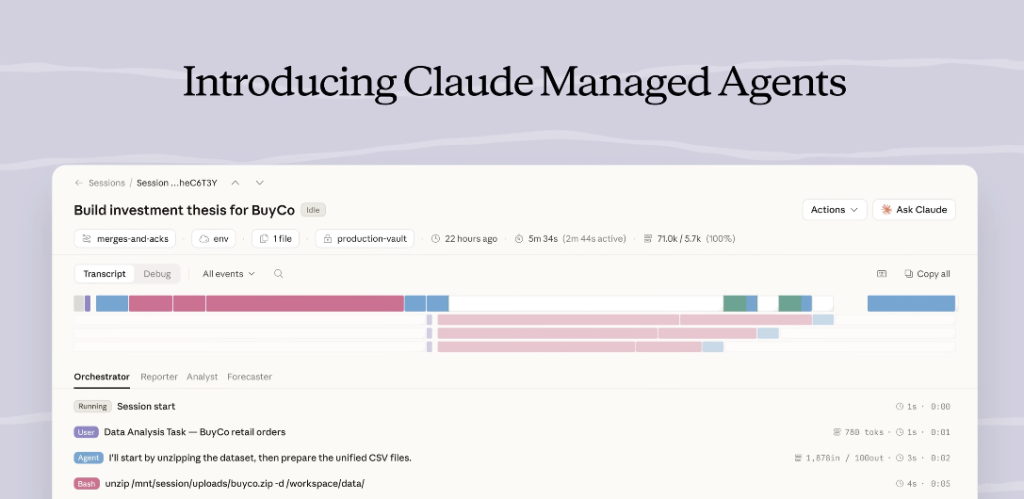
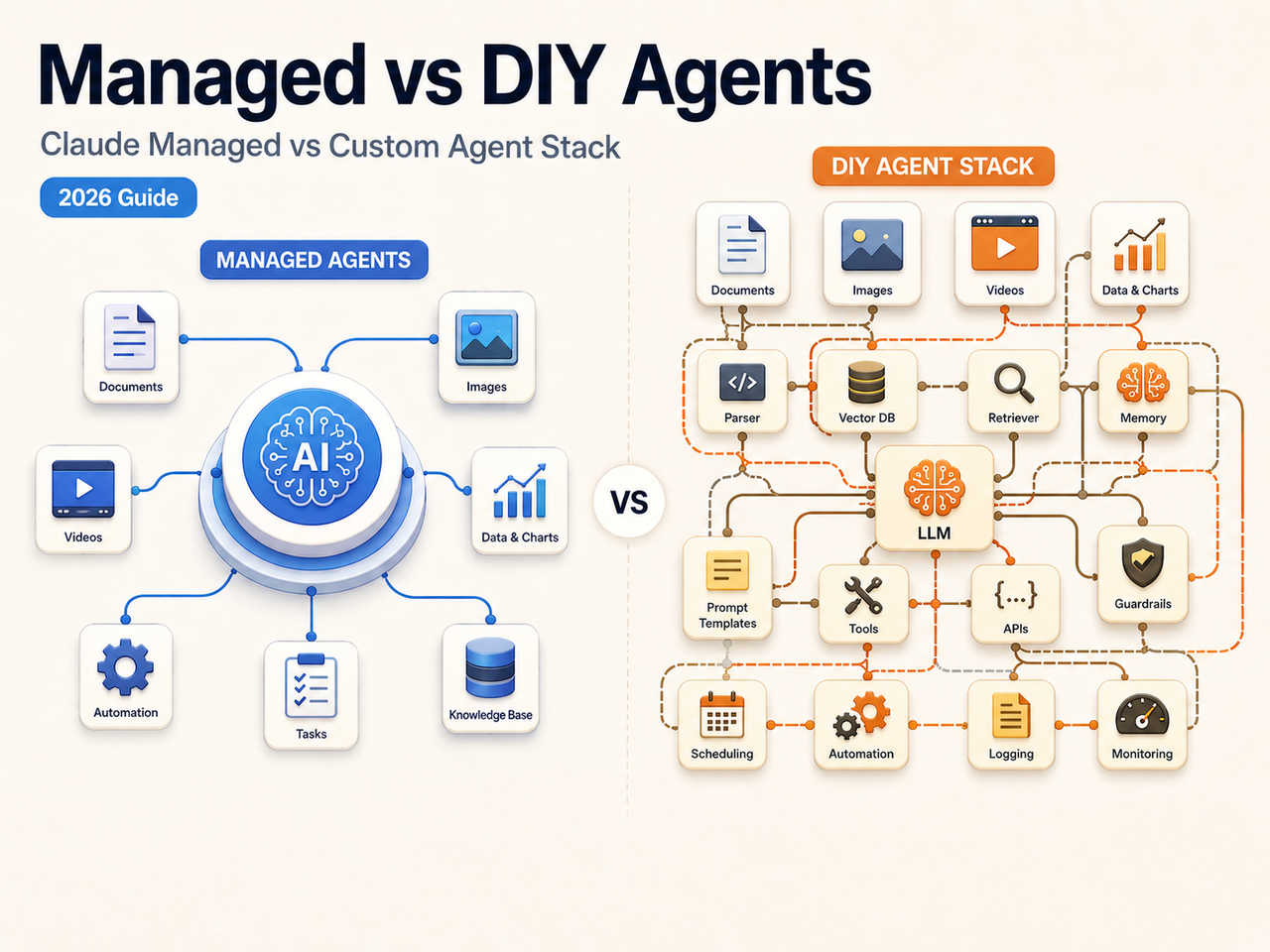
Claude Managed Agents is Anthropic’s fully managed runtime for autonomous agents, launched in public beta on April 8, 2026. It provides sandboxed execution, persistent sessions, checkpointing, scoped permissions, and tool orchestration — as a hosted service. You define the agent behavior; Anthropic handles the infrastructure underneath.
DIY agent stack — for this article, primarily LangGraph (now stable at 1.0 following its October 2025 release) or a custom agent loop built directly against the Messages API — means you own the execution environment, state management, error recovery, and deployment pipeline.
These are different categories of commitment, not just different tools.
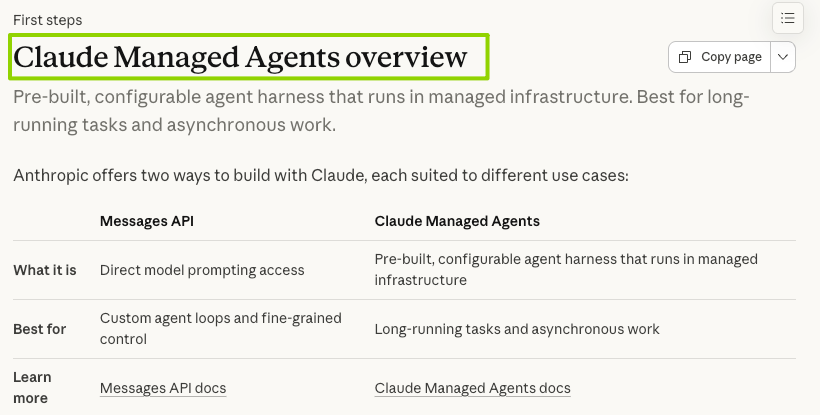
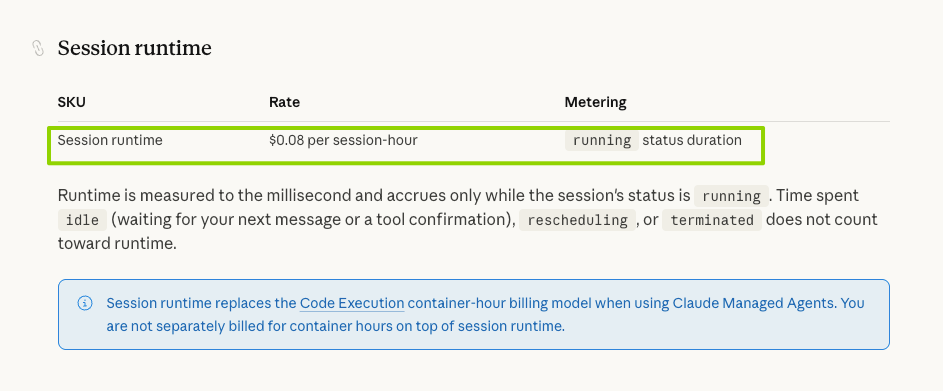
According to Anthropic’s Managed Agents overview, the service packages sandboxed code execution, long-running sessions, scoped permissions, tool orchestration, and observability into a hosted runtime — so you’re not building any of that yourself. Checkpointing means a multi-hour task doesn’t restart from zero on a network blip. The $0.08/session-hour runtime charge covers all of it: the sandboxed execution environment, state management, checkpointing, tool orchestration, and error recovery that Anthropic operates on your behalf.
You’re not paying for a virtual machine that idles whether or not your agent is active. Runtime is measured to the millisecond and accrues only while the session’s status is running. Time spent idle — waiting for your next message or a tool confirmation — does not count.
You build the sandbox or accept that there is none. You handle state persistence across sessions, checkpointing logic, retry and error recovery, observability tooling (LangSmith or equivalent), and your own deployment and scaling infrastructure.
LangGraph has a strong production story now that LangGraph 1.0 reached stable release in October 2025 — the first major durable agent framework to commit to no breaking changes until 2.0, with production deployments at Uber, LinkedIn, and Klarna. But “stable framework” is not the same as “no infrastructure work.” Implementing and maintaining LangGraph workflows in production still requires expertise in distributed systems and advanced debugging. Many teams underestimate these demands, and total cost of ownership often surpasses initial projections.
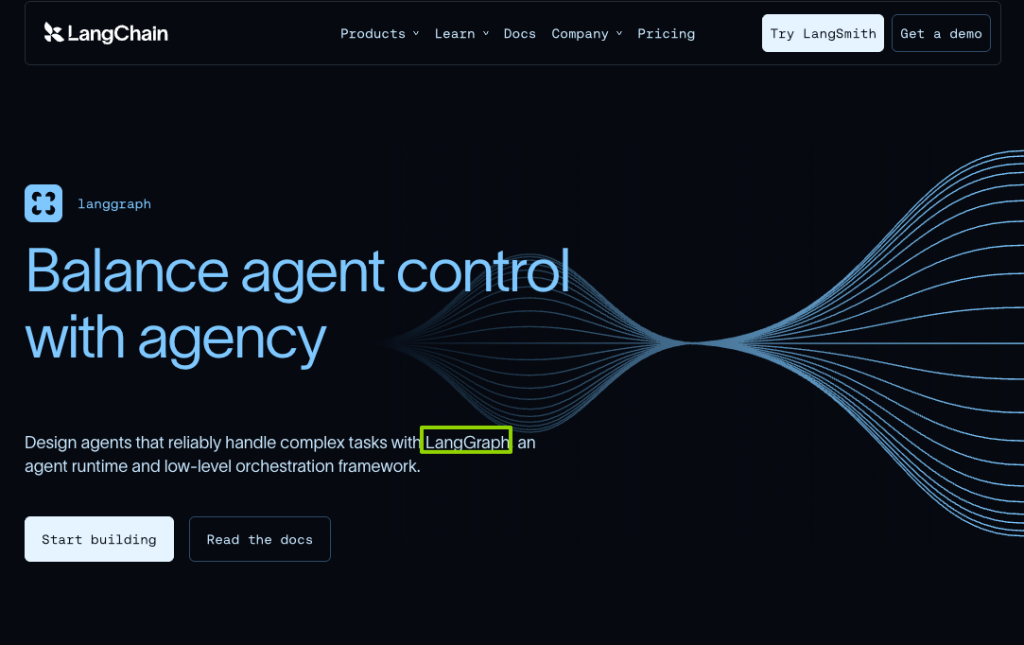
That’s not a knock on LangGraph. It’s an honest framing of what “self-hosted” actually means.
| Dimension | Claude Managed Agents | DIY (LangGraph / custom loop) |
| Time to first agent | Hours | Days to weeks (production-grade) |
| Sandboxing | Included | You build or skip it |
| Long-running session support | Native | Requires your own state persistence layer |
| Scaling | Anthropic handles it | You handle it — carefully |
| Vendor lock-in | Real risk — Anthropic-only runtime | Full portability; switch models or cloud |
| Customization | Limited per-step control | Fine-grained control over every node |
| Cost predictability | Variable — token + runtime + tool costs stack | Predictable compute; token costs same |
| Batch API discount | Not available | Available via Messages API |
| Observability | Built-in tracing | LangSmith or self-managed tooling required |
One note on cost predictability: $0.08/session-hour is not the full bill. Three separate cost dimensions apply — tokens, runtime, and per-tool charges. Web search inside a session costs $10 per 1,000 searches, on top of tokens and runtime. For most workloads, the token cost dominates — the session runtime charge is often the smaller number.
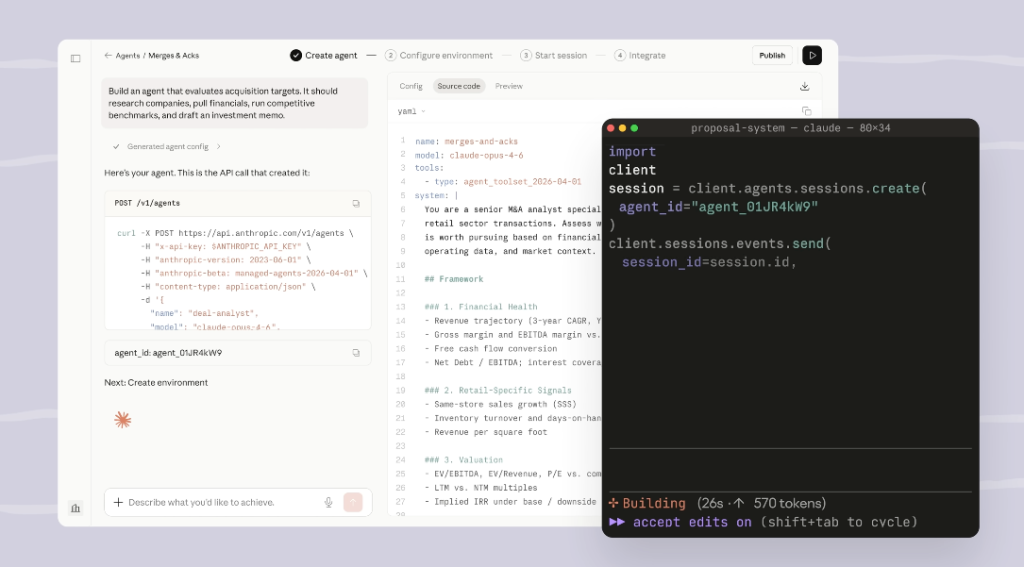
If you have a working agent design and want it in production this week — not next month — Managed Agents removes the setup cost entirely. No sandbox to build, no checkpointing logic to write, no deployment pipeline to provision.
The “10x faster” development speed claim refers to development time, not model performance. Whether your team hits that number depends on how much infrastructure work you were going to do anyway, but the direction is correct.
If the agent needs to feel reliable and recoverable to end users — not just to the engineering team — Managed Agents’ built-in checkpointing and error recovery is worth a lot. You’re not writing retry logic. You’re not explaining to a customer why their three-hour task restarted because of a network timeout.
For workloads with significant gaps between active processing steps — human-in-the-loop workflows, interactive debugging, periodic monitoring tasks — the idle exclusion materially reduces runtime cost compared to wall-clock billing.
A session that processes a document for 10 minutes and then waits 50 minutes for human review accumulates only 10 minutes of runtime charges, not 60. For async workflows, this matters.
This is a real constraint. If you’re running on Claude today but may need to route workloads to a different model provider tomorrow — or if your architecture requires provider-agnostic agent infrastructure — Managed Agents isn’t the answer. Self-hosted solutions give you full control over model choices and let you optimize costs by switching providers or using local models. LangGraph doesn’t care which model you’re calling. A custom loop cares even less.
If your use case involves regulated data and you need to control exactly where it’s processed and stored, the managed hosting model introduces questions you’ll need Anthropic to answer explicitly. Self-hosted solutions give you full control over data residency, audit logs, and compliance frameworks — but you absorb the implementation work. The tradeoff is real on both sides.
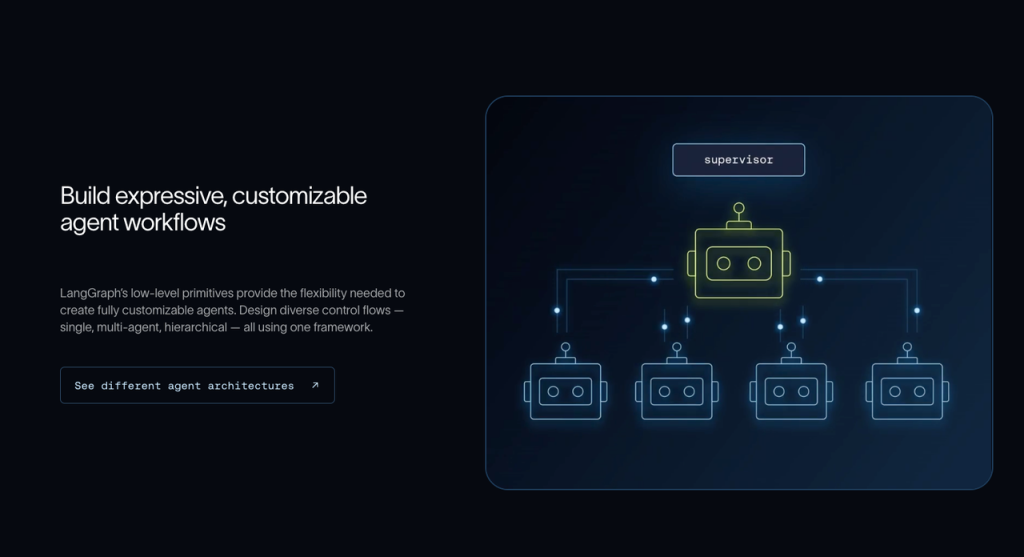
LangGraph’s graph-based architecture gives you explicit control over every state transition, every conditional branch, every retry strategy — in a way that Managed Agents doesn’t expose at the API surface. If your agent logic is genuinely complex — supervisor patterns, parallel sub-agents, dynamic routing based on intermediate outputs — the customization ceiling in Managed Agents may become limiting before you hit the LangGraph ceiling.
Let’s work through a concrete scenario rather than trading abstract claims.
A one-hour agent session on Claude Sonnet 4.6, per Managed Agents session-hour pricing on Anthropic’s official pricing page:
A continuously running agent would cost roughly $100–$200/month depending on usage. A virtual assistant, by comparison, costs $500–$2,000/month.
For DIY, the token costs are identical — you pay the same Anthropic API rates whether you call from your own loop or from Managed Agents. The difference is the $0.08/hour runtime charge versus your own cloud infrastructure costs.
The honest calculation depends on how much engineering time you’re allocating to infrastructure. A small team spending two weeks building and maintaining sandboxing, checkpointing, and observability has a non-trivial opportunity cost. A team that already has production-grade agent infrastructure running has a different calculation entirely.
One more constraint worth flagging explicitly: the Batch API 50% discount does not apply to Managed Agents. If batch-level savings are critical to your workflow, running your own agent loop on the Messages API with batch processing may still be cheaper — even after accounting for the infrastructure overhead.
Yes. Let’s be direct about it.
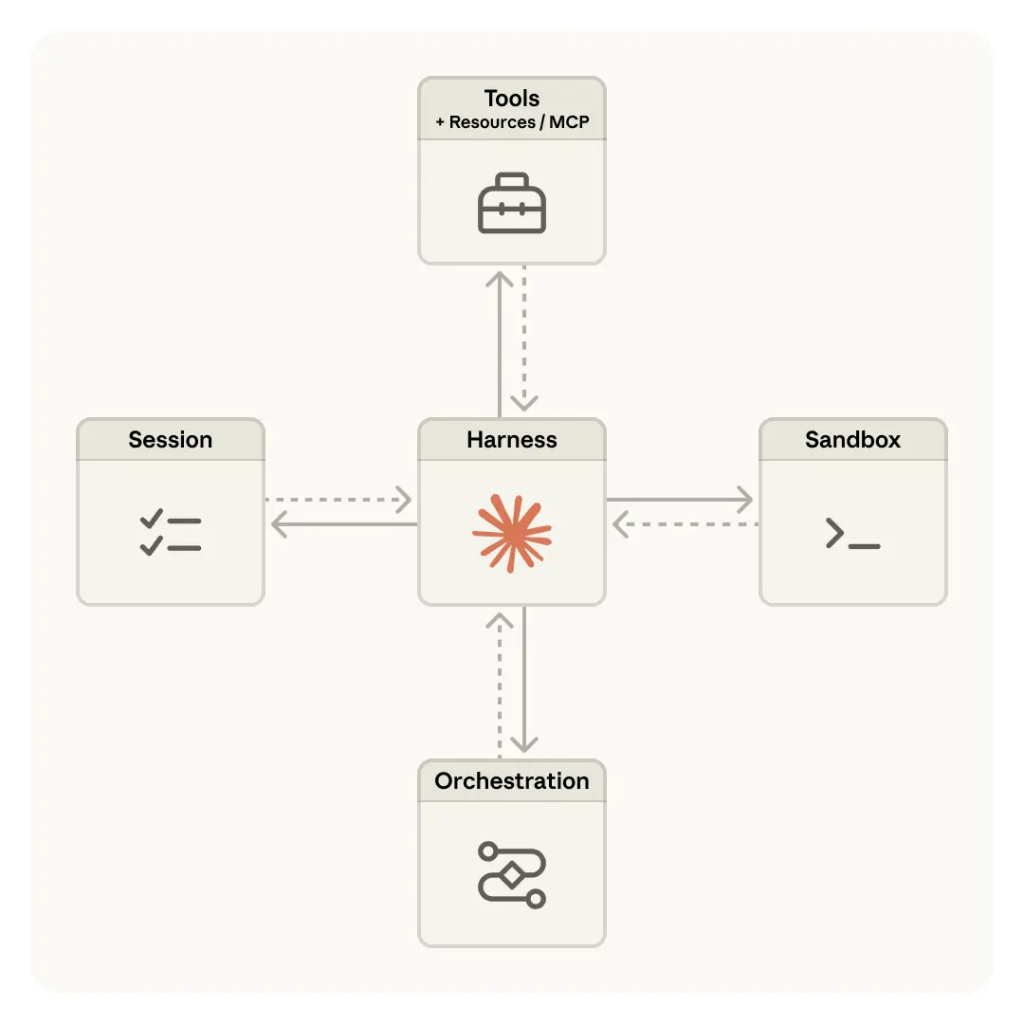
Running on Claude Managed Agents means your agent runtime is Anthropic-specific. The session model, checkpointing behavior, and sandbox configuration are all platform-bound. To understand why, Anthropic’s Managed Agents architecture design engineering post explains the Brain/Hands/Session decoupling in detail — the system is explicitly designed so interfaces stay stable as harnesses change, but that stability lives inside their platform, not outside it. If you exit, you rebuild.
If Anthropic changes pricing at GA (and the current $0.08/session-hour is a beta-era number with no committed GA equivalent), your architecture can’t route around it.
This doesn’t mean avoid Managed Agents. It means go in with clear eyes. For many teams shipping an internal tool or a single-product agent, this risk is entirely acceptable. For teams building infrastructure that other developers depend on, or products where provider flexibility is a competitive requirement, it deserves more weight.
The broader agent ecosystem is converging on shared standards — MCP for tool interoperability, A2A for agent-to-agent communication, OpenTelemetry for observability. Switching costs are coming down. But migration is still work.
Q: Can I migrate from Managed Agents to self-hosted later?
The agent logic itself is portable — your prompts, tools, and business logic don’t belong to Anthropic’s runtime. The infrastructure behavior (checkpointing, session management) is not portable and would need to be re-implemented. Plan for that work if you ever need to move.
Q: Does Managed Agents work with my existing tools and MCP servers?
Yes. The SDK handles the required managed-agents-2026-04-01 beta header automatically, and MCP server connections are supported. For high-volume agent applications, Anthropic’s enterprise sales team handles custom pricing arrangements.
Q: Is the $0.08/session-hour fee on top of token costs?
Yes. The runtime charge and token costs are separate billing dimensions. You are not separately billed for container hours on top of session runtime — session runtime replaces the Code Execution container-hour billing model when using Managed Agents.
Q: What’s the minimum technical skill needed to use Managed Agents?
You need to be able to make API calls and structure agent prompts and tool definitions. The infrastructure complexity is abstracted away. You don’t need distributed systems experience. You do need to understand what your agent is supposed to do.
Q: How does Managed Agents compare to Microsoft Copilot Studio for teams?
Different scope. Copilot Studio targets business users building Power Platform workflows with low-code tooling. Managed Agents targets developers building custom agent systems via API. If your team is Microsoft-native and needs quick agent deployment without code, Copilot Studio has a different value proposition. If you’re building something custom with model-level control, they’re not really competing.
Here’s where I’d land after running through this.
Choose Managed Agents if your team’s constraint is time-to-production and you’re building on Claude specifically. The infrastructure overhead it removes is real, the idle-time billing model is genuinely favorable for async workflows, and the cost at moderate volume is competitive with what you’d spend maintaining equivalent infrastructure.
Choose DIY if you need provider portability, have hard data residency requirements, or already have the infrastructure investment behind you. According to LangChain’s State of AI Agents 2025 report, 57% of organizations now have AI agents in production, with quality cited as the primary barrier to deployment — not cost. If your team is already past the infrastructure problem, adding Managed Agents doesn’t buy you much.
The worst outcome is spending three months building infrastructure you didn’t need, or committing to a managed runtime only to discover you needed a compliance boundary you can’t get there.
Pick based on the actual constraint. Not the one that sounds more sophisticated.
Pricing data verified against Anthropic’s official documentation. LangGraph framework data sourced from LangChain’s published changelog and independent analysis. Beta pricing is subject to change — build cost models accordingly.
Recommended Reads